
Updated September 2026. This guide is general information, not legal advice — always have an independent Thai lawyer review your purchase.
Can foreigners own a condo in Thailand?
Yes. A condominium unit is the one type of Thai real estate a foreign individual can own freehold in their own name. Under the Condominium Act B.E. 2522 (section 19 bis), foreigners together may own up to 49% of the total saleable unit area of a building — the quota is counted in square metres, not in number of units. The remaining 51% must be owned by Thai nationals or Thai entities.
When the foreign quota of a building is used up, a unit can still be bought on a registered leasehold of up to 30 years. Proposals to raise the quota or extend leasehold terms have been discussed in Thailand for years but, as of this update, none has been enacted.
Bringing the money into Thailand
To register a unit under the foreign quota, the buyer must show that the purchase price was brought into Thailand from abroad in foreign currency (section 19 ter). The receiving Thai bank issues the supporting document — a Foreign Exchange Transaction form or a credit advice, depending on the amount. Plan the transfers with the bank in advance and state the purpose as purchase of a condominium unit.
Step by step
- Choose a unit and confirm it can be registered under the foreign quota.
- Reserve it with a reservation agreement and deposit.
- Due diligence by an independent lawyer: developer, land title, building permits, EIA approval, contract terms.
- Sign the sale and purchase agreement and pay according to the construction or payment schedule.
- Transfer of ownership at the Land Office: the unit title deed (Or.Chor.2) is registered in your name.
Transfer costs
| Cost | Rate | Usually paid by |
|---|---|---|
| Transfer fee | 2% of the official appraised value | Split or as agreed in the contract |
| Specific business tax | 3.3% (if the seller held the unit under 5 years) | Seller |
| Stamp duty | 0.5% (only when business tax does not apply) | Seller |
| Withholding tax | Depends on the seller type and holding period | Seller |
| Sinking fund and common-area fees | Set by the building's juristic person | Buyer |
A temporary reduction of the transfer fee to 0.01% (1 July 2026 – 30 June 2027) applies to Thai nationals only; foreign buyers pay the standard rate. Who pays what is ultimately set by the sale agreement — check it with your lawyer.
Owning and renting out
Owners pay monthly or annual common-area fees to the building's juristic person and a one-off sinking fund contribution on transfer. Rental income from Thai property is taxable in Thailand. Owning a condo does not by itself give the right to a visa.
Buying at The Petit Tycoon
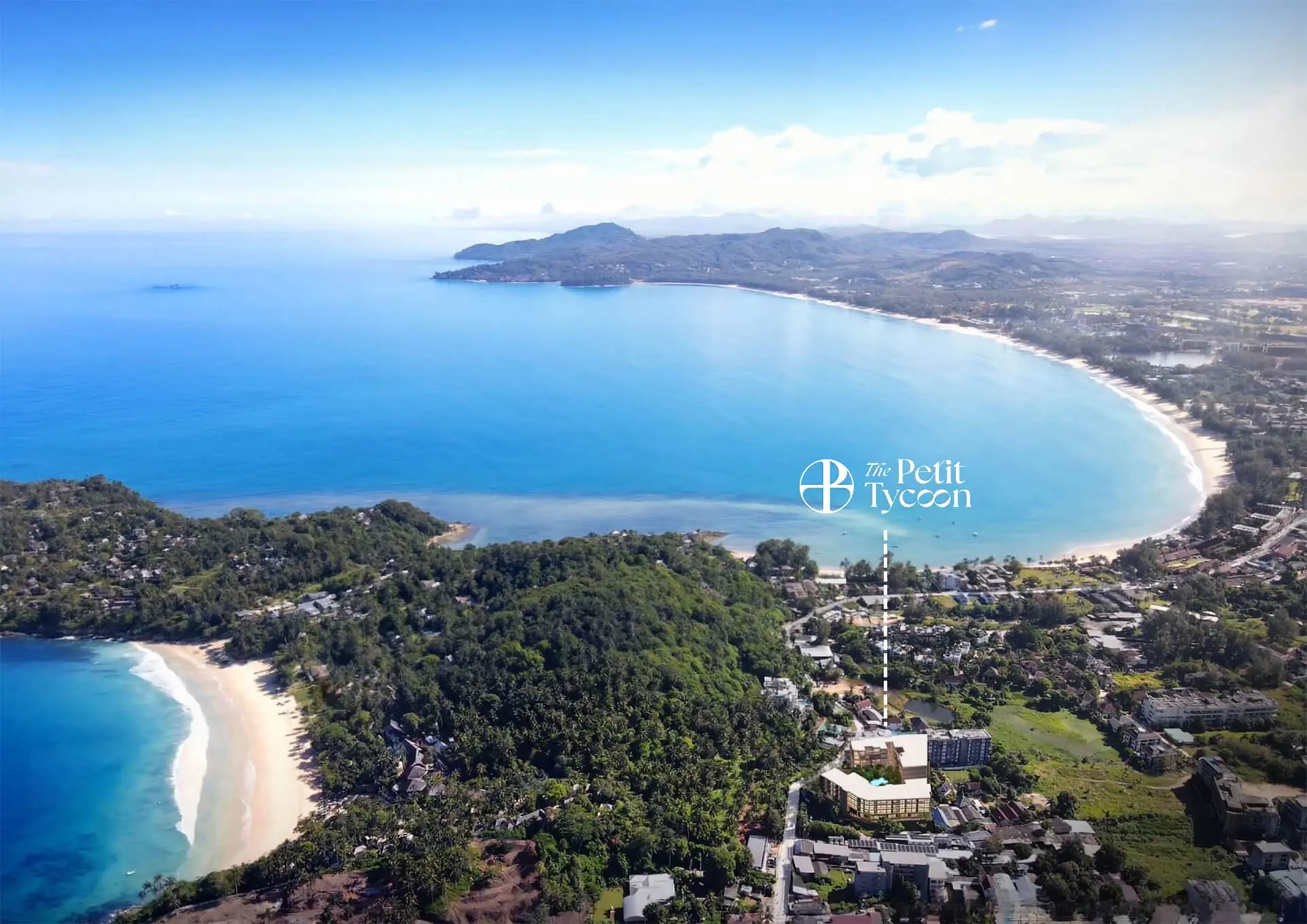
The Petit Tycoon has 77 residences on Surin Beach, from 65 to 349 m² — 2-, 3- and 4-bedroom apartments, pool villas and penthouses. Ask us which units are currently available under the foreign quota and for the payment schedule: +66 76 530 503.
Quick answers
Can a foreigner own a condo in Phuket freehold?
Yes, as long as the unit is registered within the building's foreign quota of up to 49% of the saleable area.
What happens if the foreign quota is full?
The unit can be held on a registered lease of up to 30 years instead of freehold.
Who pays the 2% transfer fee?
It is often split between buyer and seller, but the sale agreement decides.